Claudia Joskowicz: Stillness in Motion Book Launch with Eva Díaz and Sara Reisman
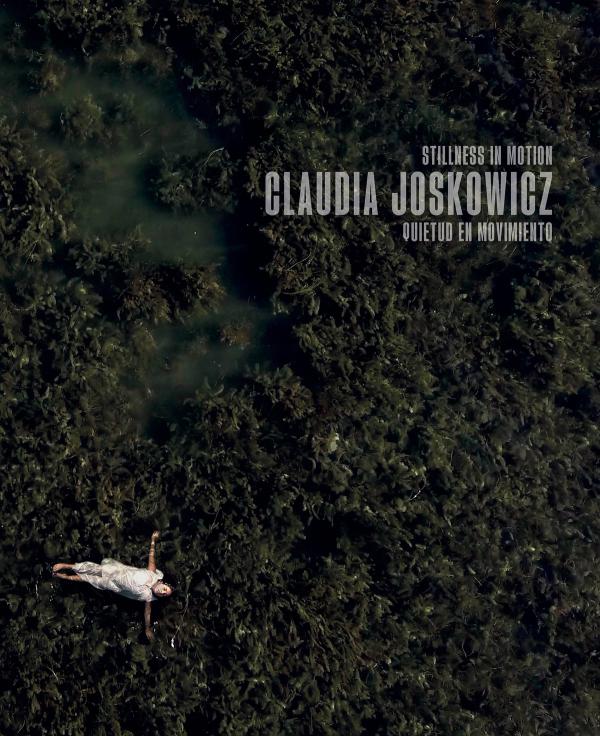
Join us on Saturday, June 27 at 4pm to celebrate the publication and launch of Claudia Joskowicz: Stillness in Motion (Turner, 2024/2025). On this occasion, Joskowicz will be joined in conversation by contributors Eva Díaz and Sara Reisman.
With contributions by Pedro Albornoz Camacho, Eva Díaz, Saul Ostrow, José Miguel Palacios, Ana Rebeca Prada, Gabriela Rangel, and Sara Reisman, this monograph documents two decades of Bolivian artist Claudia Joskowicz’s quietly groundbreaking work in video, installation, film, and photography. The bilingual book features projects that critically engage with the language of film to reexamine historical events. Drawing on incidents from Bolivia’s Spanish colonial past to the milestones of its twentieth-century history, her work examines what art historian Eva Díaz describes as “the fraught relationship between violence and Bolivian history and national identity.” Through long takes, double shots, and dialectical oppositions, Joskowicz challenges traditional uses of the camera, actively reconfiguring the gaze. Highlighting the role of the spectator in creating historical narratives, her work invites a more critical reflection on collective memory.
In her essay, “The Past Slows Down,” Eva Díaz writes, “In these reconstructions, Joskowicz portrays sites of history as palimpsests of past and present, in which the total fidelity of the camera to what it sees yields something between the idealized, beautiful memory… and a de-mystifying result.” Diaz notes that, “chance encounters and historical parallels have unpredictable aftereffects of which her film is a beautiful example—a surprising event, transmitted via an anecdote… can result in decades-later ruminations on the nature of justice and retribution.”
In “Real Life as Spectacle,” Sara Reisman describes Joskowicz’s approach in relation to “the long view, the double take, the notion of endurance: these are tropes of experimental film that figure into the work of artist and filmmaker Claudia Joskowicz. Particular to her practice is her use of the tracking shot, or slow pan, which recalibrates the pace of viewership, provoking a different kind of reading of her video work to reveal the dynamic yet subtle transformation from the initial shot to [the] final edit. Earlier work, like her trilogy of three distinct yet conceptually linked videos… refers to historically important events, each distilled to a performative moment that conveys more universal conditions borne out of violence, trauma, and resulting cognitive dissonance.”
Claudia Joskowicz is a Bolivian artist whose work explores the intersection of history, media, and collective memory through video installation and photography. It often features slow, meditative footage that blurs the line between film and still photography, recreating historical or personal events set against her native Latin American landscape. Moving from early minimalist reenactments to complex cinematic stagings, Joskowicz treats the environment itself as a main character. By emphasizing the structural elements of film, she draws critical attention to how media mediates our understanding of the past and the social realities of the present.
Joskowicz has exhibited widely both in the United States and internationally. Her work is in the permanent collections of the Guggenheim Museum, the Kadist Foundation, the Cisneros Fontanals Foundation, and the Banco Central de la República (Colombia). Her major honors include a Guggenheim Fellowship, an Anonymous Was a Woman Award, an Ama Amoedo Foundation Artist Award, a NYFA Fellowship, a Fulbright Scholar award, and a Cisneros Fontanals Mid-Career Commission. She has also completed residencies at Yaddo, the Camargo Foundation, the Sacatar Institute, and the Bronx Museum of the Arts, among others.

Eva Díaz is an art historian and critic based in Rockaway Beach, New York. She is the author of The Experimenters: Chance and Design at Black Mountain College (University of Chicago Press, 2015) and After Spaceship Earth: Art, Techno-utopia and Other Science Fictions (Yale University Press, 2025). She was a Senior Fellow at the Getty Research Institute in Los Angeles in 2023-2024, and is Professor of Contemporary Art History at Pratt Institute in Brooklyn. She is currently completing a book that explores non-visual experiences in art, such as olfaction, topological procedures, and haptics, by examining the overvaluation of certain experiences in culture (vision and cognition, distance and analysis, for example) and the devaluation of others (smell and sensuality, proximity and the body).

Sara Reisman is a curator, educator, and writer whose work focuses on socially engaged art, the history of exhibition making, and the intersections between art and social change. Reisman has held leadership roles, including Chief Curator at the National Academy of Design (2021–2025), Executive and Artistic Director of the Shelley & Donald Rubin Foundation (2014–2021), and Director of New York City’s Percent for Art Program (2008–2014). She has taught at the University of Pennsylvania, the State University of New York - Purchase College, and, since 2016, at the School of Visual Arts’ Curatorial Practice MA Program. Recent exhibitions include The Useful Life of Objects (Materials for the Arts, New York), Rumor de la Tierra (Q Galería, Quito, Ecuador), When Thoughts Are Free (601Artspace, New York), and Stephen Antonakos: Vectors of Time and Space (B&M Theocharakis Foundation, Athens, Greece).

Programs are free and open to all with RSVP encouraged.
Please note that your RSVP does not guarantee entry. Admission is on a first come, first served basis (even for those who have registered) and will be limited to the capacity of the venue. We encourage RSVPs to gauge interest in our programs.
We ask that visitors stay home if they are feeling sick or have tested positive for COVID-19 in the past 10 days. Testing before joining us at CARA is recommended. Masks will be available for free.
The closest wheelchair accessible subway is the 14th Street/8th Avenue station. The entrance to CARA is ADA-compliant, and our bookstore and galleries are barrier free throughout, with all-gender, wheelchair accessible restrooms. CARA has wheelchairs available for guest use. Please request one in advance via bookstore@cara-nyc.org. Service animals are welcome.