Abécédaire: Creolization
“With creolization, nothing disappears, everything is transformed. Everything is transformed, but nothing is diluted. Nothing is utterly and completely erased.” —Édouard Glissant
Miho Hatori
The waters of Ago Bay that November were far murkier than the Caribbean’s emerald green, as if someone had poured oat milk into the sea. I needed a 5 mm wetsuit to dive, and even then, the water was too cold to linger. And yet, beneath the surface, there was a stillness that called to mind Kannazuki—the month when all the gods of Japan have departed for Izumo Taisha Shrine, leaving the world quiet, empty, and still. This inlet is famous for pearl farming. While traveling together, my friend WangShui and I visited one of these pearl farms. The two young farmers were racing against the cold winter ahead.
Unlike other gemstones, pearls are not minerals. They are made by living creatures, and eventually used just as they are—uncut, uncarved. Born from a wound, their layered structure is the result of an accumulation of time. As hundreds of translucent layers build upon one another, light scatters in every direction, producing a soft luminescence that seems to glow from within.
When a foreign substance enters an oyster, the oyster recognizes it as a wound. In defense, it secretes nacre, gradually encasing the intruder, layer upon layer, until a pearl is formed. Without the foreign substance, the pearl cannot form. A completely uninjured oyster makes no pearl. And what is remarkable: the oyster does not expel the intruder. It envelops it, coexists with it, and turns it into layers. Not by erasing the wound, but by carrying it as layers—that is how it becomes light.
When I think about the concept of creolization, I find myself thinking about the mechanism of the pearl.
The small oyster already does this. Why do humans so rarely arrive at the same place?
Perhaps creolization is not a concept, but a way of layering the wound.It is unbearably beautiful, and unbearably fragile. We always live in between.
Miho Hatori is a Japanese vocalist, composer, and interdisciplinary artist based in New York. She is internationally known as a founding member of the band Cibo Matto. Her work begins with the voice—as composer, performer, and storyteller. She has collaborated with artists across experimental and popular music, as well as film and contemporary art. Her practice moves fluidly between music, performance, and visual environments. Hatori’s recent multimedia performance works explore perception, cultural imagination, and the relationship between sound, narrative, and image. Combining experimental composition, voice, text, and visual elements, she creates immersive performances in which sound functions as both musical expression and spatial experience.
Kaiama L. Glover
Translation is the practice I return to when I need to understand what creolization actually does—beyond its purchase as a theoretical concept, and in its resonance as bodily fact. Glissant’s creolization and its corollary, Relation, are what guide me when I carry francophone texts from French into English. As I search for modes of what I think of as Afrofluency,1 I aim not to render one language transparent to the other, but rather to place them in dialogue—even friction—letting each retain its irreducible strangeness so that something unanticipated might come into being between them. This process of dialogic enrichment is itself a mode of creolization: neither fusion nor dilution, but the alchemical trace of an encounter that transforms without erasing.
Translating makes this visceral. I sit with a sentence that will not cross over cleanly, that resists, that insists on its own opacity, and then I decide whether to domesticate it or to let it remain foreign, though welcome, in its new linguistic home. The ethical translator chooses strangeness. She lets the source language press against the target, deforming it slightly, making it accommodate something it did not know it was built for. The result is a third thing: not the original, not an English equivalent, but a new and unexpected form that bears the memory and promise of both languages and their attendant cultures without being reducible to either. This same phenomenon describes the literature I love best, and often choose to translate: accumulative, refusing synthesis, generating meaning through the tension among voices, registers, and temporalities that will not resolve—what one might call the “marvelous real” or Spiralism or, simply, a creolizing aesthetic.
What Glissant theorized as creolization, I practice as a translational method. Every choice—which word to carry across and which to let go, where to hold the tension and where to release it—is a small negotiation between worlds. Nothing disappears in a good translation. All is transformed. Everything is unsettled endlessly. The languages remain themselves and become something else entirely: a meeting place alive with the residue of contact.
NOTES
1 See Kaiama L. Glover, “Toward Afrofluency,” PMLA/Publications of the Modern Language Association of America 138, no. 3 (May 2023): 850–53.
Kaiama L. Glover is Professor of Black Studies and French at Yale University. She is the author of A Regarded Self: Caribbean Womanhood and the Ethics of Disorderly Being and Haiti Unbound: A Spiralist Challenge to the Postcolonial Canon, and is completing a biography, For the Love of Revolution: René Depestre and the Poetics of a Radical Life and an essay collection, ‘Blackness’ in French: Race Matters in Translation. She is an award-winning translator of francophone literature, founding co-editor of archipelagos | a journal of Caribbean digital praxis, and founding co-director of In the Same Boats, an Afro-Atlantic digital cartography. She has won fellowships from the National Endowment for the Arts, the National Endowment for the Humanities, the PEN/Heim Foundation, the Mellon Foundation, and the NYPL Cullman Center.
Problematizing Glissant's Creole Exceptionalism: Creolization as Creative Adaptation Based on Universal Principles, Not a Ladder, an Abnormality or a Museum Piece
Michel DeGraff
When Édouard Glissant names “creolization,” he names a world in motion: “Not a dialect, not a patois, not a deformation, but something new and unexpected.”1 Born from encounter—heterogeneous elements thrown into “Relation” rather than purity and stasis—like every other language, in uniformitarian fashion. Unexpected, perhaps, but certainly not un-human, notwithstanding Europeans’ colonial prejudices about the Africans’ humanity—or lack thereof. These prejudices were a hallmark of scientific racism as tool for conquest and domination. So, I want to extend Glissant’s definition into a universal “poetics of becoming.” Indeed, every language learner, in acquiring a new idiom, re-creates its grammar, and re-creation perforce involves innovation. Glissant’s wager keeps its historical edge: to refuse the pretense of purity—those origin-fantasies that launder contact, conflict and invention. That, to me, is the ethical pulse of the Tout-Monde: grades of humanity dissipate, as do supremacist linguistic hierarchies that exclude Creoles from the ranks of “normal” and “complex” languages.
But Glissant also smuggles in three moves we must leave behind if creolization is to illuminate the humanity of Creole speakers rather than mystify it. First, the ladder from non-language to language: “They start out as a Petinègue and very quickly evolve into a system, before becoming a language.”2 This storyline, quite popular among colonial then neocolonial linguists, imagines Creole languages as growing from drastically impoverished jargons or pidgins—understood as imperfect, infantile pre-languages that later “graduate” into “full” humanity. Yet, there is no evidence that Kreyòl in Haiti—or any other Creole for that matter—passed through such a “petit nègre” childhood. Kreyòl emerged as language under extraordinarily brutal hierarchies of power, yes, but through ordinary human capacities: adults and then children learning, innovating and stabilizing linguistic structures in dense contact ecologies.3
Second, the “new world, new words, old grammar” scenario: In this hypothesis, the Creole lexicon originates from the speech of “Norman or Breton sailors” or from the “French in its formative stages” while Creole syntax is a compound of African grammars.4 This “overlay” model splits creolization into a lexical skin and a syntactic skeleton, repeating an outdated and untenable division of linguistic labor whereby deep structure rules over superficial words. In reality, the documented history of Kreyòl suggests that in colonial Haiti, both lexicon and syntax were jointly shaped by multilingual interaction, second-language acquisition, and innovation—by contingencies of history, yes, but also by the universal architecture of our human faculty for language.
Third, a spectacular performative gap: Glissant writes about Creole, yet he did not—so far as his original publications show—ever write any sustained, full and autonomous texts in Creole. That gap rehearses what I call “Creole Exceptionalism”: Creole is praised in theory, somewhat as a museum piece to be admired in the abstract on paper, even as it is denied as a medium in and for the lived experiences of its speakers, essential to their well-being and socioeconomic opportunities.5
In Haiti, all of these gaps matter because, too often, myths become policy. If Kreyòl is in any way deemed “abnormal,” it is to keep French as the gatekeeper of schooling and citizenship (“élite closure,” as analyzed by sociolinguist Carol Myers-Scotton6). “Pale franse pa vle di lespri” (speaking French does not mean you’re smart). This proverb is not anti-French; it is anti-subjugation. Creolization, rightly understood, demands schools, publications, administration and courts that function in Creole languages. The proverb Kreyòl pale, kreyòl konprann (“Creole is spoken so that Creole speakers can be understood”) entails a Tout-Monde where access to Creole languages is a civic right. Only then can literacy, education, democracy and justice for Creole speakers no longer amount to an oxymoron that requires self-erasure—the exclusion of their languages, identities and cultures.
“Twou manti pa fon” (the hole where lies hide isn't deep). Theories, like policies and practices, cannot rest forever on exceptionalist dogmas.
NOTES
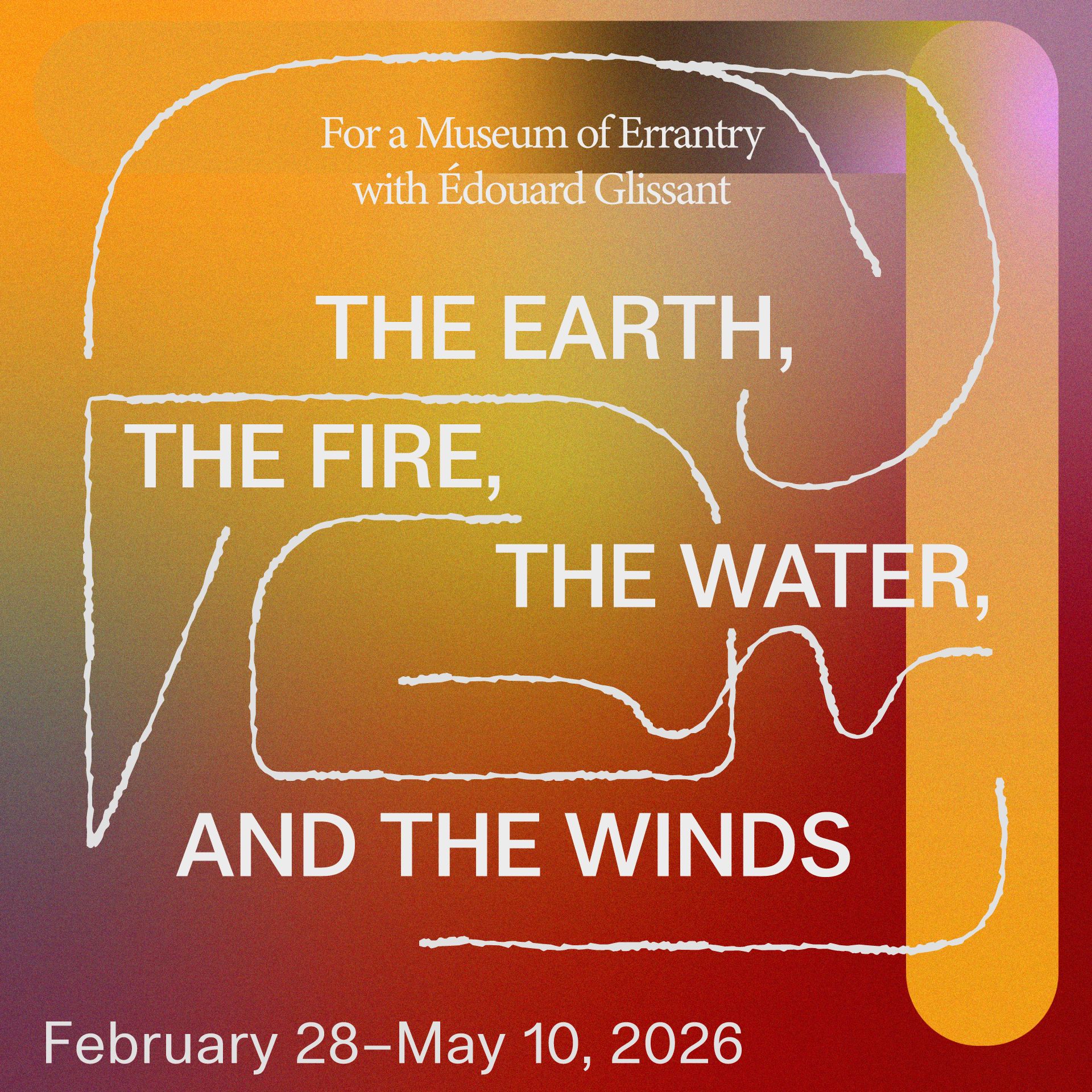
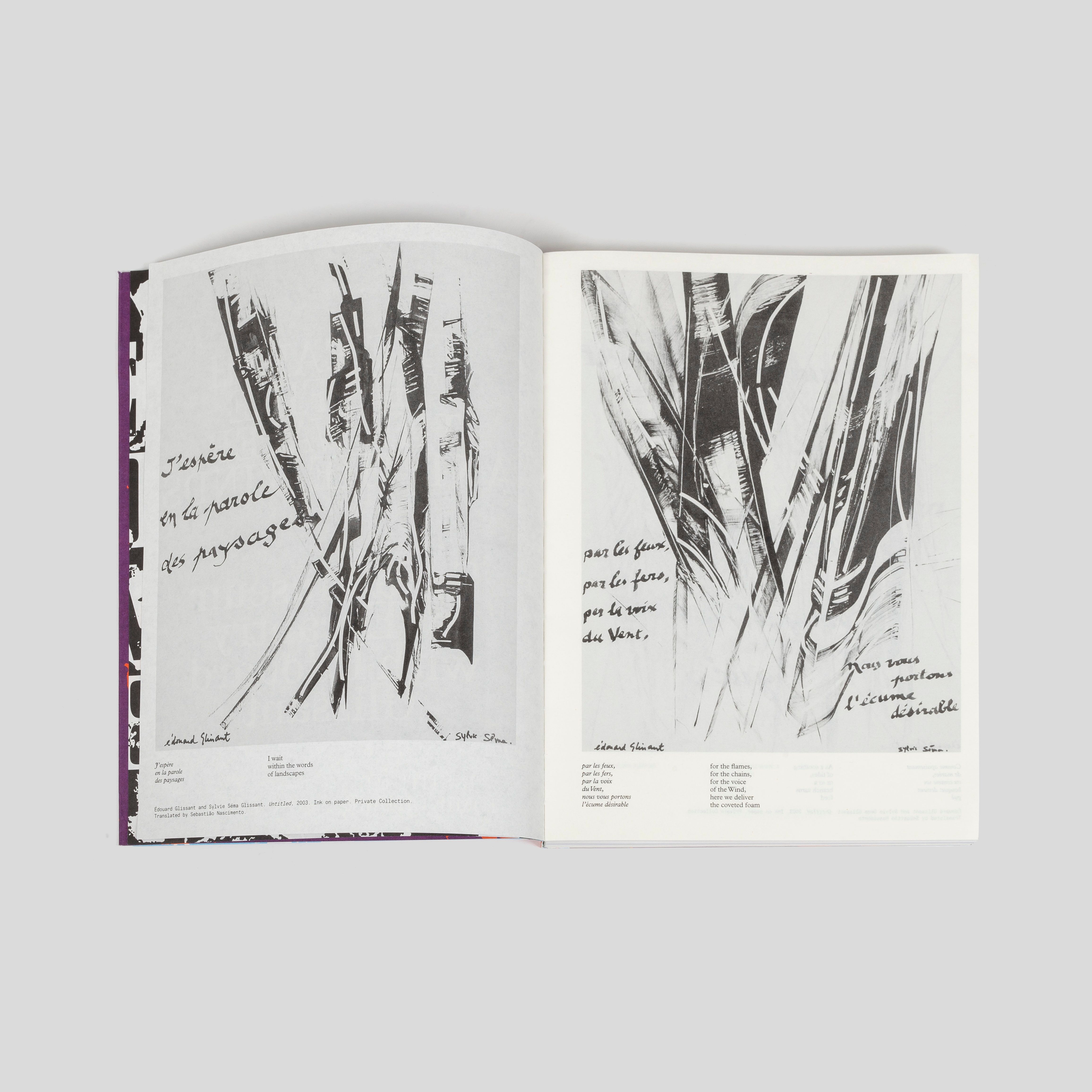
1 Édouard Glissant on creolization in “Abécédaire: Édouard Glissant in Conversation with Patrick Chamoiseau,” recorded in January 2008, trans. Sebastião Nascimento, published in The Earth, the Fire, the Water, and the Winds: For a Museum of Errantry with Édouard Glissant (New York: CARA; São Paulo: Instituto Tomie Ohtake, 2025), 48.
2 Ibid., 47.
3 For more, see my forthcoming English/Kreyòl book, Our Own Language: Harnessing the Power of Kreyòl and Other Mother Tongues for Education and Liberation / Lang a nou : Kreyòl ak lòt lang manman se zouti pou edikasyon ak liberasyon, to be published in August 2026 by MIT Press.
4 Glissant, “Abécédaire,” 47.
5 This point is further developed in Our Own Language / Lang a Nou.
6 See Carol Myers-Scotton, “Elite Closure as a Powerful Language Strategy: The African Case,” International Journal of the Sociology of Language, no. 103 (1993): 149–64.
Michel DeGraff is Professor of Linguistics and “Faculty at Large” at the Massachusetts Institute of Technology. His work examines how language and linguistics shape decolonization and liberation struggles among the “Wretched of the Earth,” with a particular focus on Creole studies, his native Haiti and, more recently, on the Orwellian manipulation of language and history to create fog around Israel’s genocide of Palestinians. A Fellow of the Linguistic Society of America and former recipient of a $1 million National Science Foundation grant for the development of educational resources in Haitian Creole (“Kreyòl”), he is a founding member of the Haitian Creole Academy and a co-founder and co-director of the MIT–Haiti Initiative. His publications have ranged from theoretical to liberatory linguistics, including scholarship on Kreyòl morphosyntax, Creole formation as language change, language and power, educational policy, critical race theory, decoloniality and so on. His writings have appeared in scholarly outlets such as Behavioral and Brain Sciences, Language, Language and Society, Curriculum Inquiry, The Journal of Haitian Studies and The Journal of Postcolonial Linguistics, and in popular venues such as The Boston Globe, The New York Times, Newsweek, The Boston Review, Le Monde Diplomatique, Middle East Eye, Mondoweiss, and CounterPunch. He is the author of the forthcoming bilingual (Kreyòl/English) book Our Own Language: Harnessing the Power of Kreyòl and Other Mother Tongues for Education and Liberation / Lang a nou (MIT Press, 2026).
An n fouye zo nan kalalou Eksepsyonalis Kreyòl nan travay Glissant. Lang kreyòl se adaptasyon kreyatif ki suiv prensip tout lang ; se pa mach eskalye, se pa anomali, se pa bèbèl
Michel DeGraff
Édouard Glissant te konsidere lang kreyòl kòm miwa yon monn ki toujou an mouvman : « Se pa yon dyalèk, se pa yon patwa, se pa yon defòmasyon ; men, se yon fenomèn tou nèf ke pèsonn pa t kalkile ».1 Se yon lang ki pran nesans nan fwotman ant plizyè lang — plizyè eleman diferan ki vin antre nan « Relasyon » youn ak lòt e se yo tout ki oblije chanje nan fwotman sa a. Se kon sa sa ye pou tout lang tou patou. Se vre, pafwa rezilta fwotman sa yo ka siprann nou ; men, pinga nou panse kreyòl pa nan menm nivo ak lòt lang. Se prejije kolon yo ki te konn fè moun kwè sèten moun « pa moun ase » epi lang pa yo pa lang ase. Se prejije sa yo —prejije rasis syantifik — ki konn sèvi kòm zouti pou kolonizasyon ak lòt kalite dominasyon.
Se pou sa menm mwen vle rapousuiv definisyon Glissant sou « kreyolizasyon ». Wi, chanjman se tankou yon pwezi k ap chante nan nanm chak grenn lang. Chak fwa yon moun aprann yon lang (kit se ti moun k ap benyen nan lang matènèl yo, kit se gran moun k ap aprann yon nouvo lang), fòk aprenan an re-kreye chapant lang lan nan sèvèl pa li. Se pwosesis re-kreyasyon sa a ki pote inovasyon nan fason aprenan an vin pale lang l ap aprann lan. Men, Glissant ensiste sou yon detay ki enpòtan anpil : li rejte lejann ki di gen lang ki pa pote mak okenn lòt lang ladan — kòm ki dirè ta gen kominote ki pa janm antre nan okenn fwotman, okenn melanj ak okenn konfli pa rapò ak kominote ki pale lòt lang. Se sa mwen wè kòm fondal natal prensip « Tout Monde » lan : yerachi ant moun an wo ak moun an ba dwe disparèt, gwojemoni lengwistik dwe disparèt. Lang kreyòl se lang tankou tout lòt lang. Tout moun se moun ; tout lang se lang.
Men, nan analiz Glissant sou kreyolizasyon, li glise twa pwopozisyon ke, selon mwen, nou dwe abandone si n vle pou konsèp « kreyolizasyon » an rive kore diyite moun ki pale kreyòl yo. Pinga konsèp sa a vin sèvi pou bafwe diyite nou. An n demistifye twa pwopozisyon sa yo youn apre lòt :
1) Ipotèz « mach eskalye » soti nan kategori mòd pale ki « pa lang » rive monte nan kategori mòd pale ki « lang » tout bon :
Glissant di gen yon premye etap nan istwa lang kreyòl yo lè yo te kòmanse kòm « Petitnègue »epi, ann apre, « se byen vit yo vin tounen lang tout bon ».2 Sa se yon ipotèz ki te trè popilè nan epòk kolonyal la e ki toujou popilè pami lengwis neyo-kolonyalis yo. Ipotèz sa a ta vle fè n kwè lang kreyòl yo, o kòmansman, te gen chapant ki rachitik anpil epi se ann apre yo te « grandi » pou yo vin gen chapant « lang » ki lang tout bon.
E poutan, pa gen okenn prèv ki demontre lang kreyòl Ayiti a (oswa nenpòt ki lòt lang kreyòl) te janm pase nan yon etap kote yo te « bebe lang » anvan yo tounen lang ki nòmal. Lang kreyòl la te emèje nan yon sitiyasyon ki te brital anpil — an ba kolonizasyon, esklavaj ak lòt yerachi pouvwa ki malouk. Men, kreyòl te evolye gras a kapasite nòmal ki egziste nan sèvèl tout moun : gran moun kon ti moun k ap aprann lang, k ap inove, k ap chapante lang yo e k ap fè yo vin pi stab.3
2) Ipotèz « nouvo monn, mo nouvo nan chapant ansyen » :
Gen yon lòt ipotèz Glissant ofri : li vle fè n kwè vokabilè kreyòl yo soti nan pawòl kolon franse —tankou maren nòman ak breton — ansanm ak lang franse nan premye etap fòmasyon li epi sentaks lang kreyòl yo ta soti nan lang Afriken yo.4 Ipotèz sa a separe pwosesis kreyolizasyon an an 2 pati : kòm ki dirè vokabilè a se po epi chapant sentaks la (egal : fason mo yo konbine youn ak lòt) se eskelèt. Men, separasyon sa a — ki bay sentaks priyorite sou vokabilè — se yon ipotèz ki san fonnman e ki fin demode. An reyalite, nan peryòd kolonyal la, ni vokabilè ni sentaks te makonnen e te an ba enfliyans plizyè lang ki t ap fwote youn ak lòt pami moun ki t ap aprann e inove nouvo lang. Nan sikonstans sa yo, se ni vokabilè ni sentaks ki t ap chanje ansanm. Sikonstans istorik yo te gen enpak sou rezilta chanjman sa yo ; men, se kapasite lengwistik tout moun genyen (chema lengwistik ki inivèsèl) ki te gide chanjman sa yo tou.
3) Yon gwo mank: Glissant ekri sou kreyòl ; men, li pa ekri an kreyòl :
Twazyèm pwen an pi senp ; men, li enpòtan : Glissant ekri anpil sou kreyòl ; men, jan piblikasyon li yo montre sa, li pa t ekri okenn tèks konplè e otonòm an kreyòl. Sa se yon mi wo mi ba ki antre nan yon kategori prejije mwen rele « Eksepsyonalis Kreyòl » kote save yo fè lwanj pou kreyòl nan diskou ; yo fè l bèl nan teyori sou papye kòm ki dirè kreyòl ta sèvi kòm echantiyon atizay pou n admire nan vitrin mize ; men, yo pa sèvi ak kreyòl kòm zouti pou n kreye demen miyò pou moun ki pale kreyòl — demen miyò nan lekòl, nan travay, nan lajistis, nan sèvis piblik e latriye.5
Ann Ayiti, mi wo mi ba sa yo gen konsekans ki grav paske se yo ki nan nannan gwojemoni : lè save yo fè moun kwè kreyòl « pa nòmal », se prejije sa yo ki kenbe franse kòm kle pou lekòl ak pou sitwayènte e sa bloke avansman moun ki pale kreyòl sèlman. Se sa sosyolengwis Carol Myers-Scotton rele « fèmti elit » la. Kreyòl gen yon pwovèb ki di : « Pale franse pa vle di lespri ». Pwovèb sa a pa anti-franse. Egal : sa pa vle di franse pa bon ; sa vle di franse pa dwe sèvi pou n devalorize e oprime moun ki pale kreyòl.
Si n vle valorize lang kreyòl e si n kwè lavi moun ki pale kreyòl konte, fòk lekòl, liv, biwo leta, tribinal ak tout lòt enstitisyon fonksyone an kreyòl.
Nou gen yon lòt pwovèb ki di : « Kreyòl pale, kreyòl konprann ». Sa vle di : si w ap pale ak pèp la, fòk pèp la ka konprann ou. Selon prensip sa a, konsèp « Tout-Monde » Glissant an ta dwe mete itilizasyon lang kreyòl la kòm yon dwa sivik fondal natal. Se kon sa edikasyon, demokrasi ak jistis ap vin posib pou tout moun — san otorite yo pa mete baboukèt ni sou bouch, ni sou idantite, ni sou kilti okenn moun.
Epi, kòm dènye rapèl, an n sonje pwovèb kreyòl ki di « Twou manti pa fon ». Malatchong nan liv, nan politik e nan pratik pa fouti kache vitam eternam — vle pa vle, manti sa yo ki nan Eksepsyonalis Kreyòl gen pou kaba devan verite konsènan lang kreyòl yo.
« Verite se kon lwil nan dlo ».
1 Édouard Glissant sou kreolizasyon nan « Abécédaire : Édouard Glissant an konvèsasyon avèk Patrick Chamoiseau » ki te anrejistre an janvye 2008 ; tradiksyon Sebastião Nascimento te pibliye nan The Earth, the Fire, the Water, and the Winds: For a Museum of Errantry with Édouard Glissant (New York : CARA ; São Paulo: Instituto Tomie Ohtake, 2025), paj 48.
2 Menm referans lan, paj 47.
3 Mwen pataje pi plis detay sou sa nan liv mwen ki ekri an kreyòl e angle Our Own Language : Harnessing the Power of Kreyòl and Other Mother Tongues for Education and Liberation / Lang a nou : Kreyòl ak lòt lang manman se zouti pou edikasyon ak liberasyon. Liv sa a ap parèt an septanm 2026 nan MIT Press.
4 Glissant, « Abécédaire », 47.
5 Mwen devlope pwen sa a pi plis nan liv Our Own Language / Lang a nou.
Michel DeGraff se pwofesè lengwistik nan MIT. Li fè rechèch sou fason lang ak lengwistik antre nan batay pou dekolonizasyon ak liberasyon pami malere tou patou. Li mete anfaz sou etid kreyòl yo, sitou nan kontèks peyi natal li, Ayiti, e, pi resamman, sou fason yo manipile lang ak istwa (jan George Orwell te dekri sa) pou kreye bwouya sou jenosid Izrayèl ap fè kont Palestinyen. Li se Fellow (manm selèk) nan Sosyete Lengwistik oz Eta Zini. Fondasyon Nasyonal pou Lasyans oz Eta Zini te ba li yon sibvansyon 1 milyon dola pou l ede nan devlòpman resous edikatif an kreyòl pou Ayiti. Li se yon nan manm fondatè Akademi Kreyòl Ayisyen epi li se youn nan edikatè ki te lanse Inisyativ MIT-Ayiti kote li se ko-fondatè e ko- direktè.
Li pibliye nan plizyè domèn, soti nan teyori lengwistik rive nan lengwistik pou liberasyon. Li fè rechèch sou mòfoloji ak sentaks lang kreyòl yo, sou istorik lang sa yo (li konsidere sa kòm yon kalite chanjman lengwistik), sou lang ak pouvwa, sou politik edikasyon, sou ras, sou dekolonyalite e latriye. Piblikasyon li yo parèt nan jounal syantifik tankou Behavioral and Brain Sciences, Language, Language and Society, Curriculum Inquiry, The Journal of Haitian Studies ak Journal of Postcolonial Linguistics. Epi li pilbliye nan jounal pou gran piblik tankou Boston Globe, New York Times, Newsweek, Boston Review, Monde Diplomatique, Middle East Eye, Mondoweiss ak CounterPunch. Li se otè yon liv bileng (kreyòl ak angle) MIT Press pral pibliye an septanm 2026 : Our Own Language : Harnessing the Power of Kreyòl and Other Mother Tongues for Education and Liberation / Lang a nou : Kreyòl ak lòt lang manman se zouti pou edikasyon ak liberasyon.